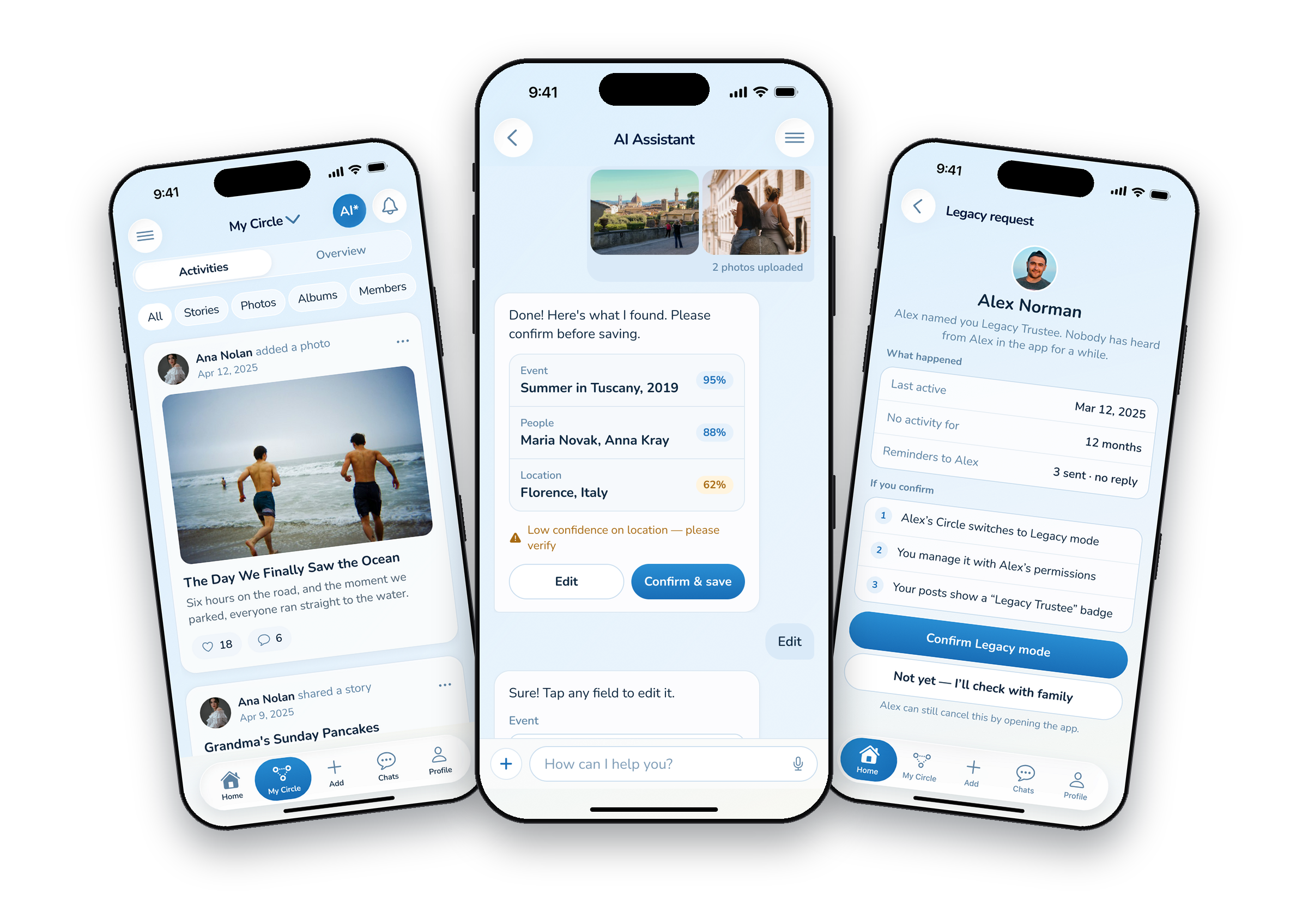
A lot of AI, in a product about people you may have lost.
Research: reading the brief against itself
I put every requirement of the brief into a compliance matrix: what we design, what we change, and why. Read side by side, the requirements started to argue with each other — AI “always on” vs. opt-in face recognition, a public archive vs. private family memories. Some didn’t survive a phone or a privacy-first product, so each change went to the client with a reason he could agree to.
Structure: a role belongs to a Circle, not to a person
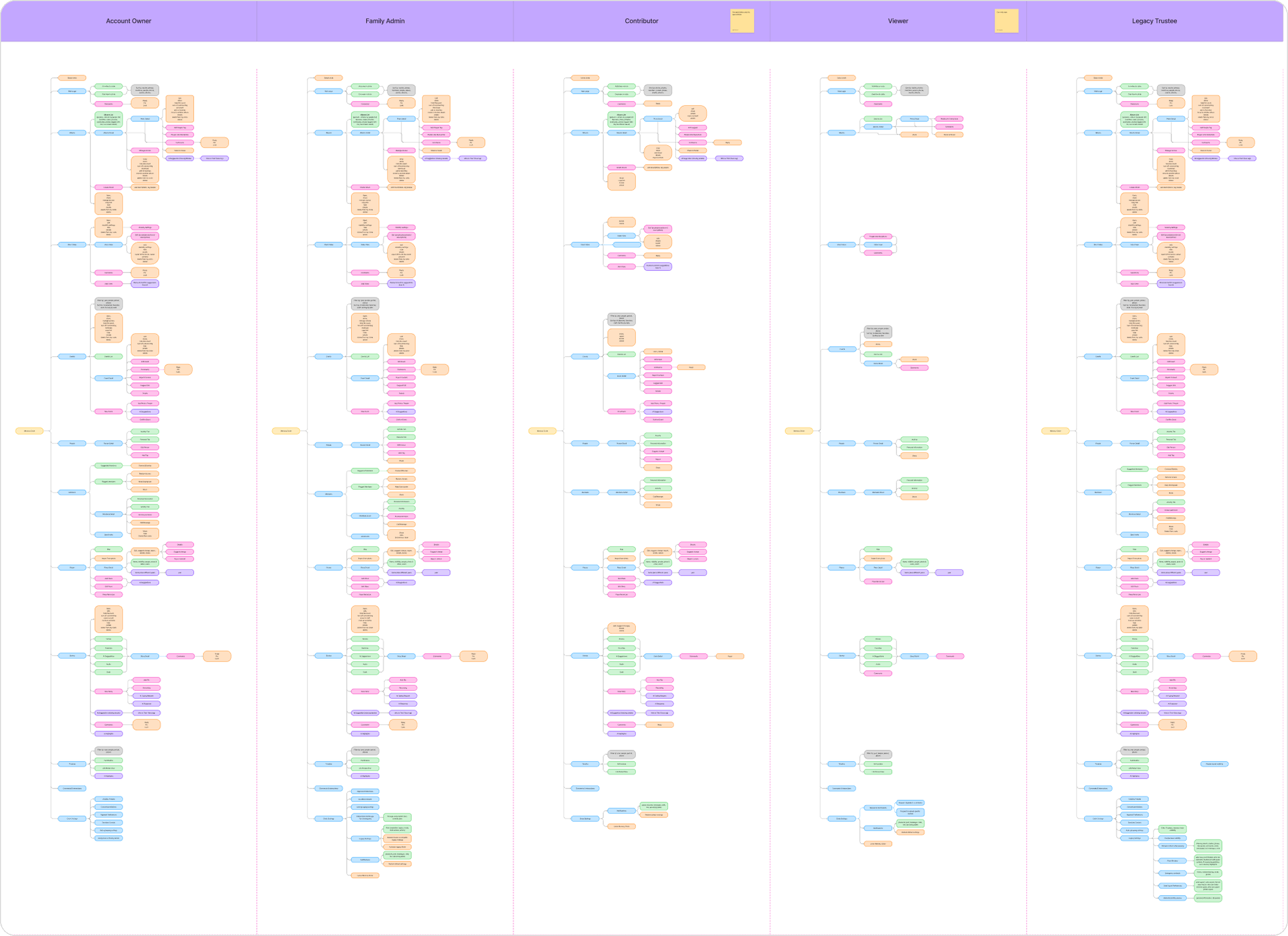
Before wireframes I wrote down who can upload, comment, report, export and take over — for the Owner, Family Admin, Contributor, Viewer and Legacy Trustee — and built the information architecture from scratch: shared parts like Home and the AI Assistant, and a separate Memory Circle for each role. The consent rules for AI avatars came from the client, and we refined them together as the flows took shape: none by default, a living person accepts for themselves, and for someone who has died the Legacy Trustee decides.
Flows: AI suggests, people confirm
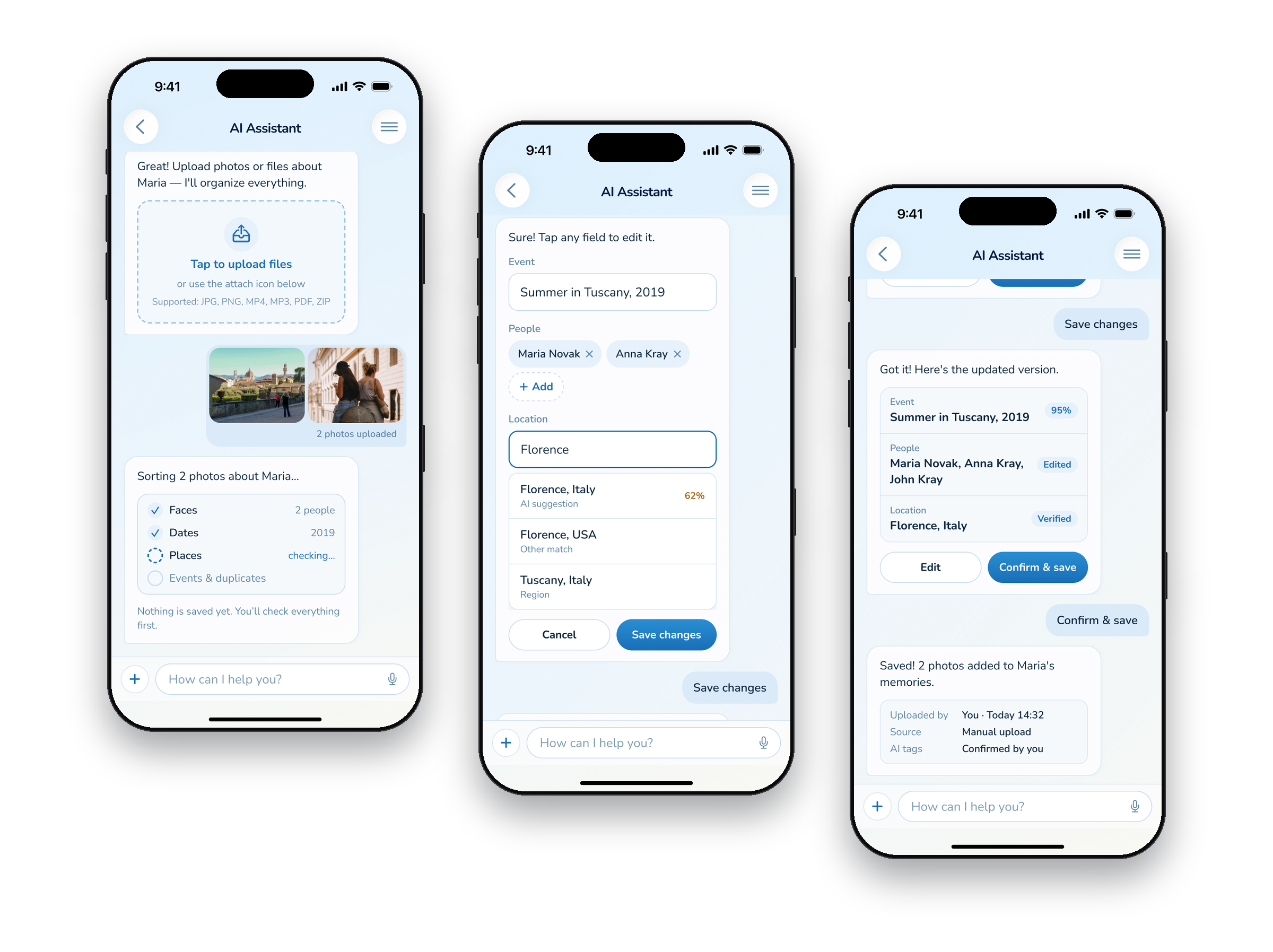
A box of old photos is exactly where AI helps: faces, dates, places, duplicates. But a wrong name under a photo of someone you lost hurts more than a wrong tag. So AI never tags anyone on its own. In the AI Assistant chat you can upload a whole batch: it groups the files, shows what it found with a confidence score, asks to “please verify” the low ones, and saves nothing until you confirm. Upload to an album the usual way and you tag people yourself; skip it, and AI looks for faces anyway — then a notification asks you to confirm who’s in the photo and brings you back to the same chat.
When the owner is gone, the plan still has to work
The owner names a Legacy Trustee in advance, who takes over the Circle after their death. I laid out six ways to start it, from a Family Admin request to a death certificate check. The client chose one: the Family Admin. I pushed back with one scenario — what if the admin is unavailable, in conflict, or gone too? Then the owner’s plan never runs. We agreed on a fallback: an inactivity period the owner sets in Legacy Settings. Either way, the Trustee confirms.
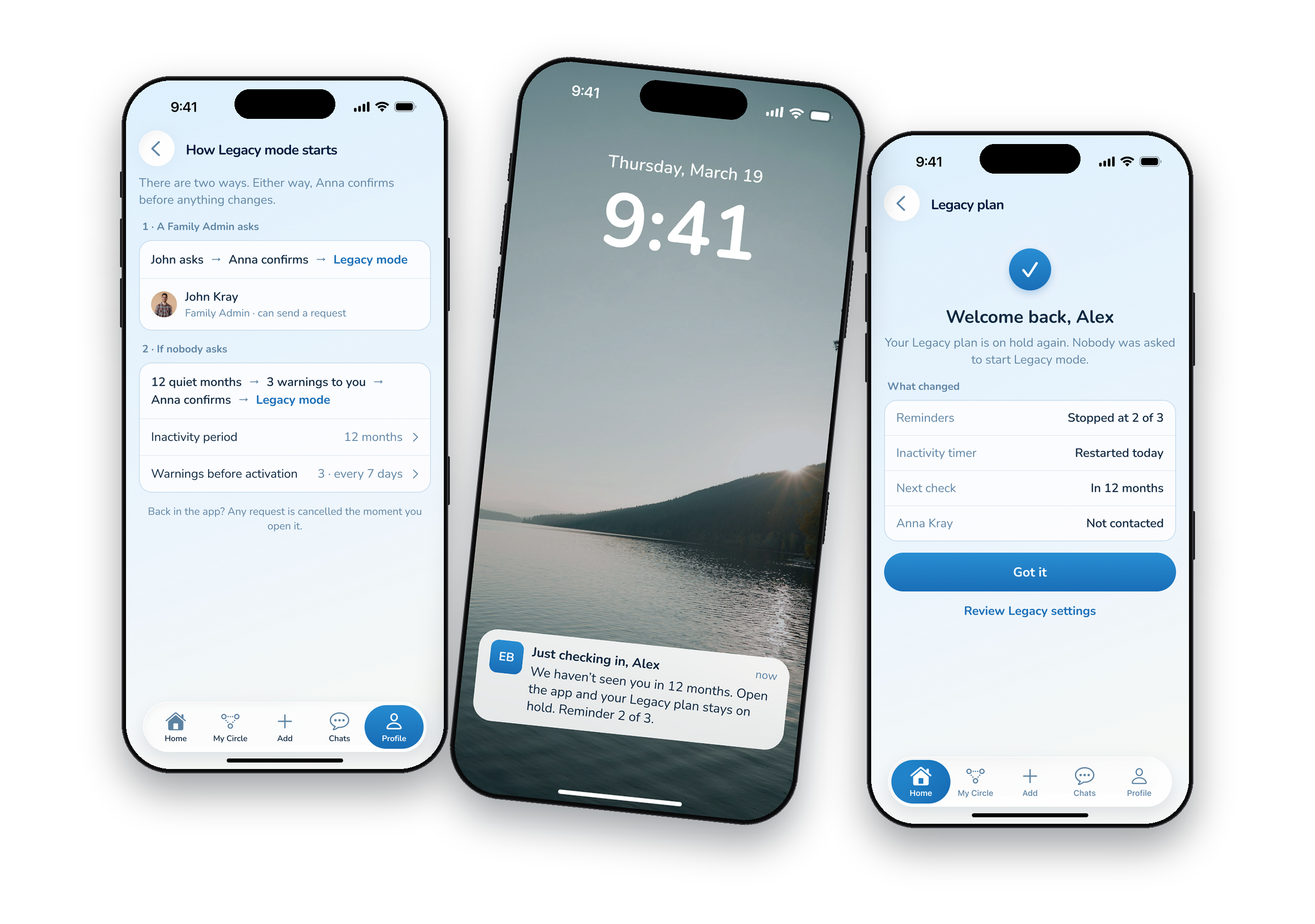
UI: my own continuation
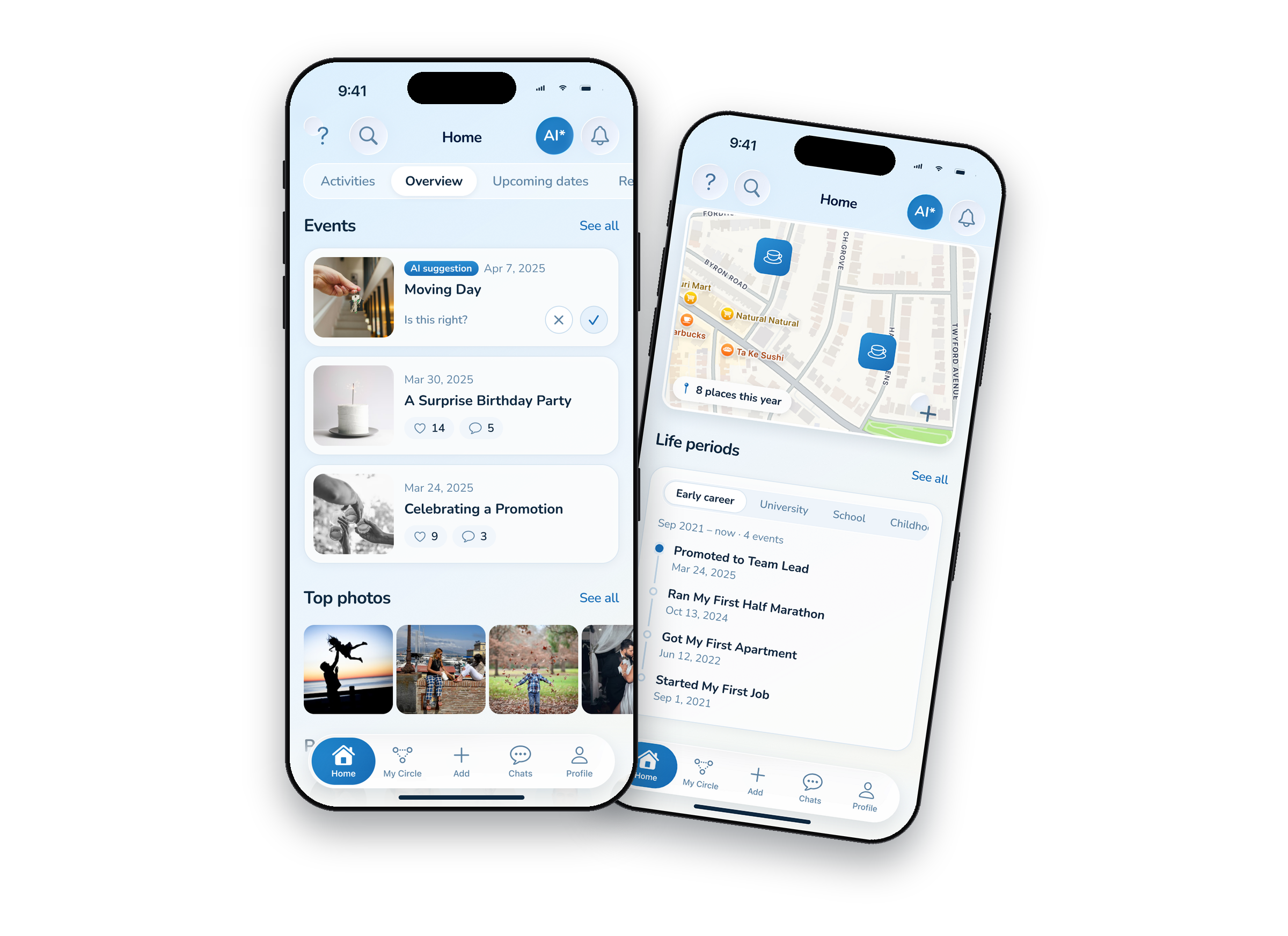
Flows and wireframes went to the client. The UI is my own continuation: it starts with the Home Dashboard — soft colour, real photos, and AI finds, like a possible move, that people confirm or reject right in the feed — and carries the same language into AI upload and legacy. Calm and quiet: no streaks, no badges to chase, and no “memorial” words. The client asked for “Memory Circle” everywhere, and the tone followed.







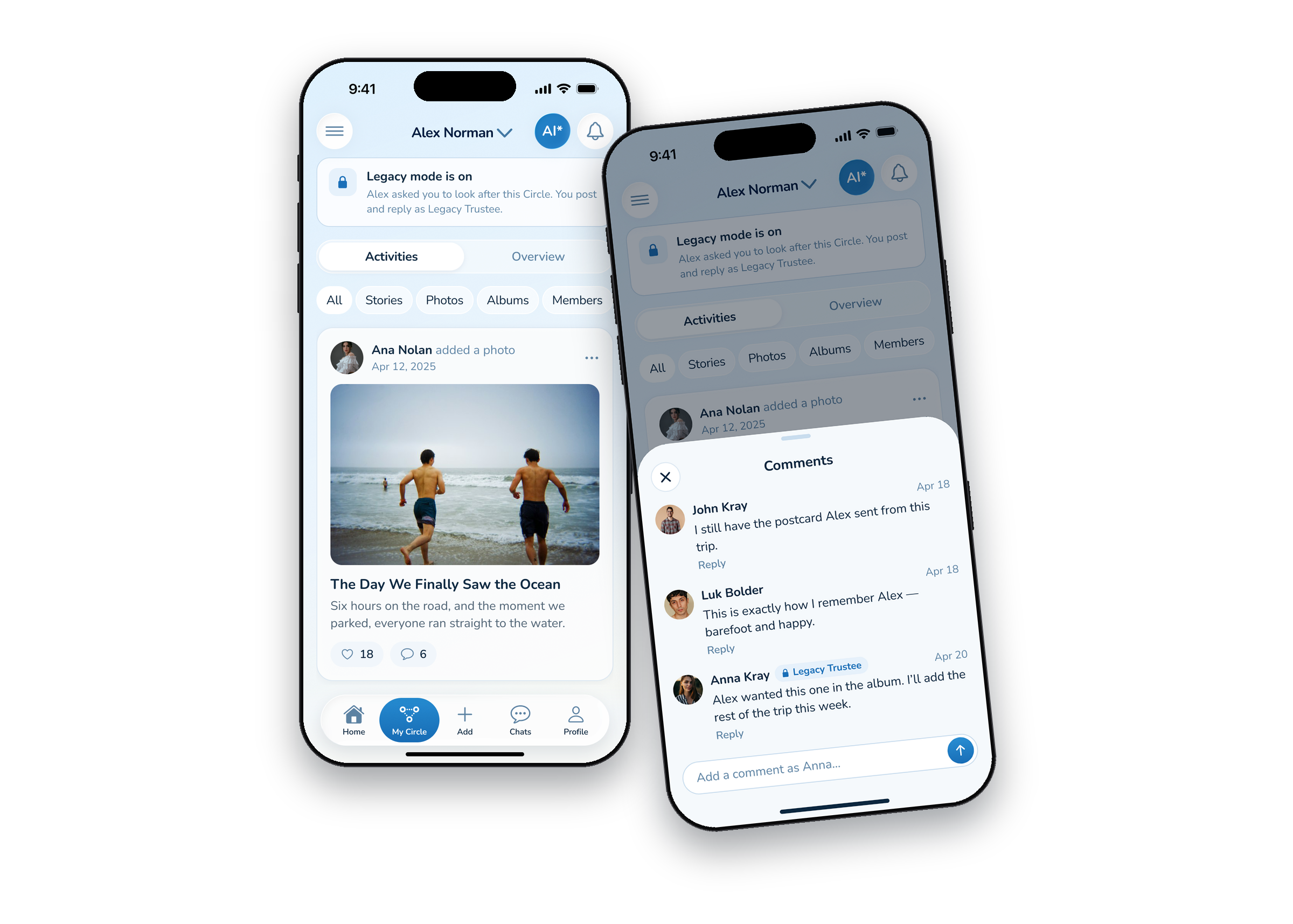
A product logic the client signed off on.
Flows and wireframes for every role, an IA rebuilt from scratch, and a master spec where each decision keeps its reason and each open question its owner. The app isn’t built yet, so there’s nothing to measure; this is what the design gives it: